


Blog
History of Kamalia Khaddar: 7 Fascinating Facts Behind Pakistan’s Iconic Fabric

History of Kamalia Khaddar: The Story Behind Pakistan’s Iconic Handwoven Fabric
There are fabrics that are simply manufactured.
And then there are fabrics that carry the identity of a place.
Kamalia Khaddar belongs to the second category.
For generations, the name Kamalia has been connected with traditional Khaddar, cotton, handlooms, and the patient craftsmanship of local weavers. Across Pakistan, people recognize Kamalia as one of the country’s most important centers of Khaddar production.
But how did this happen?
Why did people in Kamalia begin making Khaddar? Why did the city become famous for it? And how did a traditional local craft become a name recognized throughout Pakistan?
The history of Kamalia Khaddar is not simply the history of a piece of fabric. It is a story about land, cotton, craftsmanship, local communities, and a tradition that survived because people continued to make something useful with their hands.
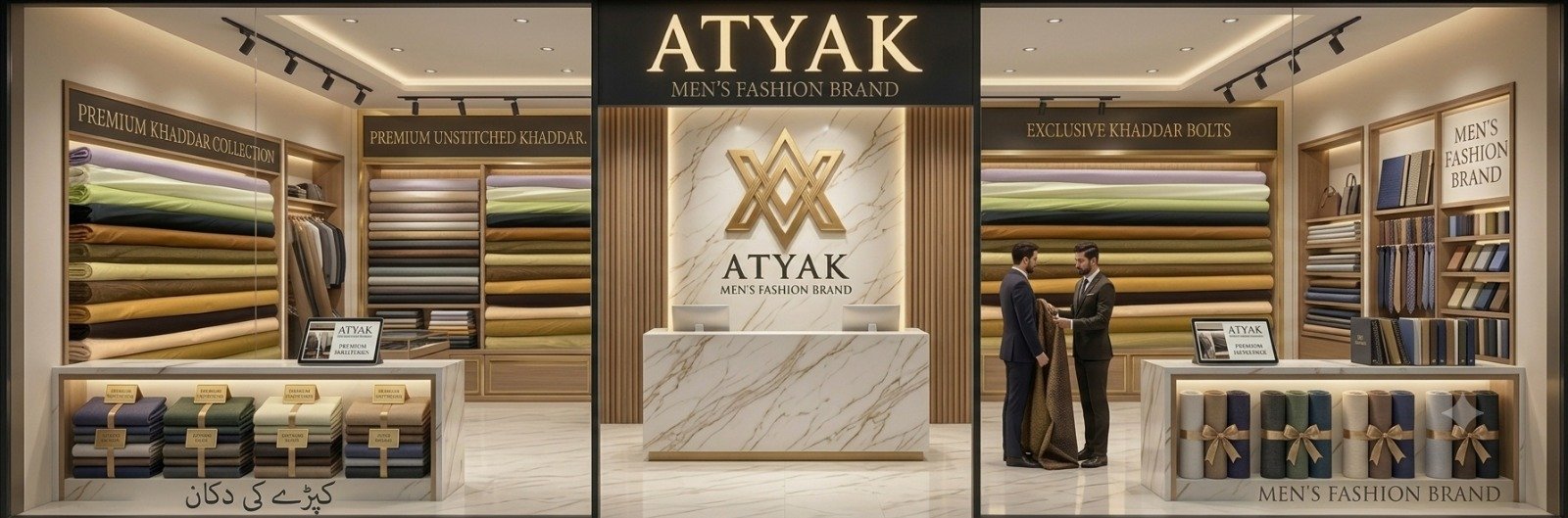
At ATYAK, we believe that when you wear a fabric, you should know something about where it came from.
Because fabric should not have to be anonymous.
What Is Kamalia Khaddar?
Khaddar, also commonly written as Khadi, is a traditional textile made from natural yarn and woven using traditional weaving techniques.
In the context of Kamalia, the name Kamalia Khaddar refers to the traditional Khaddar associated with the city of Kamalia in Punjab, Pakistan.
The fabric is known for qualities such as:
- A distinctive natural texture
- Breathability
- Durability
- Comfort
- A strong connection to traditional Pakistani clothing
- A character that develops with use and washing
Unlike perfectly uniform industrial fabrics, traditional Khaddar often has a more natural appearance. The small variations in texture are not necessarily flaws. They are part of what gives the fabric its character.
A machine can produce thousands of identical metres.
A traditional weaving culture produces something with a sense of place.
That difference matters.
The History of Kamalia: The Land Behind the Fabric
To understand the history of Kamalia Khaddar, we first need to understand Kamalia itself.
Kamalia is a historic city in Punjab, situated near the Ravi River. According to the Municipal Corporation Kamalia, the city is considered one of the older cities in Punjab, and the area has historically been strongly connected with agriculture. Cotton is among the important crops grown in the wider region. The city is also officially recognized for its Khaddar and handmade carpets.
This combination is important.
A textile tradition does not usually appear from nowhere.
When a region has:
- Cotton cultivation
- Agricultural communities
- Local demand for clothing
- Skilled artisans
- Generations of practical knowledge
it creates the conditions for a textile industry to develop.
Kamalia had many of these ingredients.
The result was a community in which weaving became more than a single occupation. It became part of the local economy and cultural identity.
Why Did People in Kamalia Start Making Khaddar?
The simplest answer is that Khaddar was practical.
Before modern industrial textiles became widely available, people depended heavily on locally produced materials for clothing. Cotton was available in agricultural regions, and weaving allowed communities to transform raw material into usable fabric.
This created a natural relationship:
Cotton grew in the region.
People needed clothing.
Weavers had the skills to turn yarn into fabric.
Over time, this process became a tradition.
The knowledge of preparing yarn, setting up looms, weaving fabric, and finishing the cloth was passed from one generation to another.
This is how many traditional crafts survive. Not through one dramatic historical moment, but through thousands of ordinary people continuing to do the work.
One generation teaches another.
The loom keeps moving.
The fabric keeps being made.
The Role of Cotton in the History of Kamalia Khaddar
Cotton played an important role in the development of Khaddar traditions throughout the Indian subcontinent.
For Kamalia, the agricultural character of the region provided an important foundation for cotton-based textile production. The local availability of cotton, combined with weaving knowledge, helped create the conditions for the development of a strong Khaddar tradition.
The fabric was useful because cotton could provide:
- Comfort in everyday clothing
- Breathability
- Durability
- A natural feel
- Versatility for traditional garments
This practicality helped Khaddar remain relevant.
It was not created to sit in a glass display case and be admired by people wearing synthetic fabric.
It was made to be worn.
From Traditional Craft to Kamalia’s Textile Identity
Over time, weaving became deeply associated with Kamalia.
The city developed a reputation for Khaddar and other traditional crafts. According to the Municipal Corporation Kamalia, the city is nationally known for Khaddar and handmade carpets.
This reputation was built gradually.
A city becomes famous for a craft when enough people in that place continue to produce it with a recognizable level of skill and consistency.
Eventually, the name of the place becomes part of the identity of the product.
This is how Kamalia Khaddar became more than simply “Khaddar made somewhere in Punjab.”
The name began to communicate origin.
It connected the fabric with a particular place, a particular craft tradition, and a particular way of making textiles.
The Importance of Handlooms and Khaddi
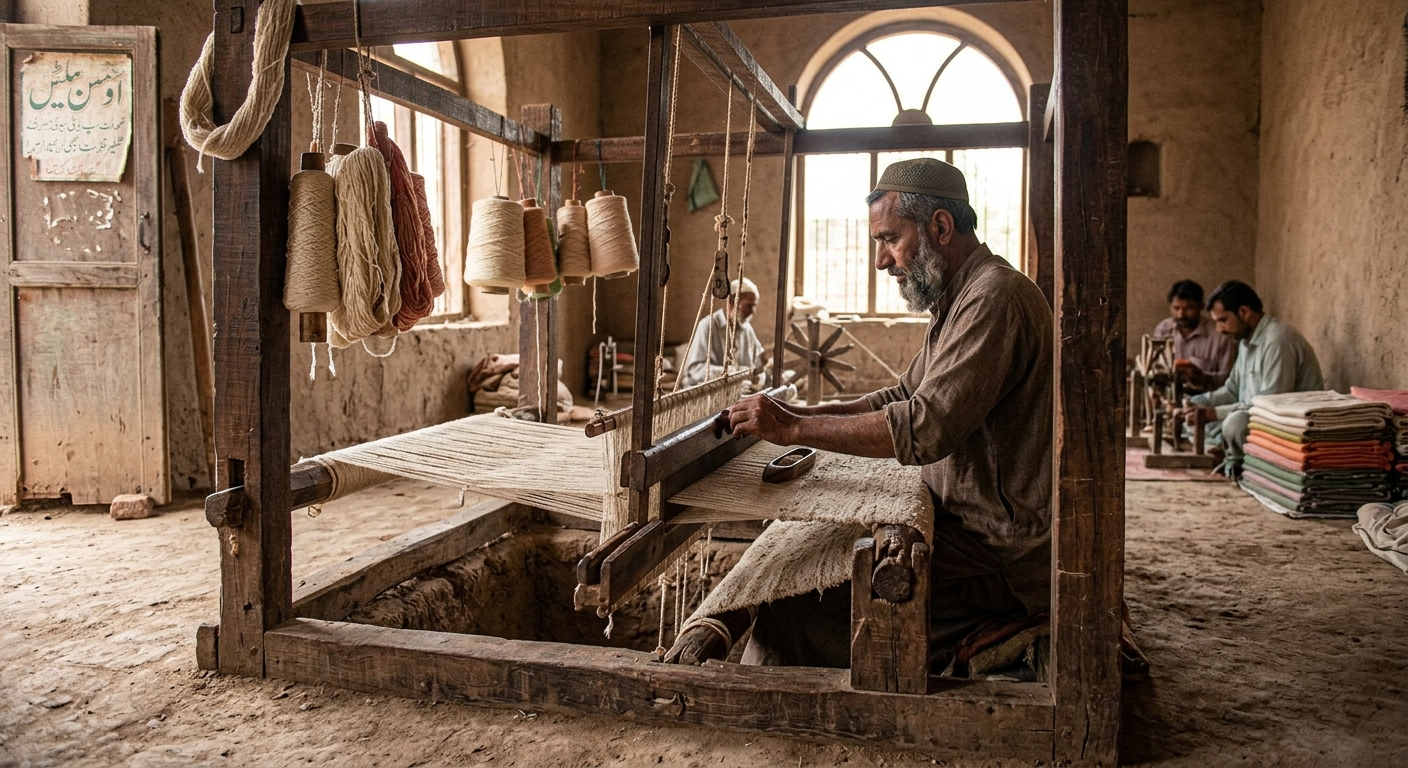
Traditional Khaddar is closely associated with the Khaddi, or handloom.
The basic principle is simple:
Yarn is arranged carefully on the loom, and the threads are interwoven to create fabric.
The process requires skill, patience, and attention.
A weaver must work with:
- Yarn tension
- Thread alignment
- Weave structure
- Fabric density
- Consistency
- Finishing
The result is a fabric with a texture that often feels different from highly standardized industrial cloth.
That texture is part of the personality of Khaddar.
At ATYAK, this is one of the things we find most meaningful about traditional fabric.
The cloth is not completely detached from the human hands that helped create it.
There is still a story between the cotton and the final garment.
Kamalia Khaddar and the History of Self-Reliance
Khaddar also has a wider history across South Asia.
During the independence movement in the subcontinent, locally produced cloth became strongly associated with self-reliance and resistance to dependence on imported textiles. The movement helped give Khaddar a cultural and political significance beyond its practical use as clothing.
This history helped transform Khaddar into more than just fabric.
It became associated with ideas such as:
- Local production
- Self-reliance
- Craftsmanship
- Cultural identity
- Independence
After the Partition of the subcontinent, textile traditions continued developing in Pakistan. Kamalia emerged as one of the most recognized centers associated with Khaddar production.
The tradition continued because the people making the fabric continued.
That part is often left out of polished brand stories.
The real history is less glamorous but more meaningful.
A craft survives because someone keeps showing up to do the work.
What Makes Kamalia Khaddar Special?
The popularity of Kamalia Khaddar comes from several factors.
1. A Strong Regional Identity
The name Kamalia has become closely associated with Khaddar in Pakistan.
For many people, “Kamalia” immediately brings to mind traditional fabric and weaving.
That kind of reputation cannot be created overnight with a marketing campaign.
It is built over generations.
2. Natural Cotton Character
Cotton Khaddar has a natural texture and feel that many people appreciate.
Unlike completely synthetic materials, cotton provides a familiar, breathable feel that works particularly well with traditional Pakistani clothing.
3. Durability
Good Khaddar is valued for its strength and long-lasting nature.
A well-made fabric is not supposed to become useless after a few wears.
That idea seems obvious, yet the modern fashion industry has somehow managed to make disposable clothing a business model. Khaddar represents a different approach.
Buy something.
Wear it.
Take care of it.
Keep it.
4. Traditional Craftsmanship
The techniques associated with Khaddar production are part of a wider textile heritage.
The value is not only in the final cloth.
It is also in the knowledge required to produce it.
5. A Distinctive Texture
One of the most recognizable characteristics of traditional Khaddar is its texture.
It does not always have the perfectly smooth, uniform appearance of mass-produced fabric.
That is precisely why many people like it.
The texture gives the fabric personality.
Is All Kamalia Khaddar the Same?
No.
This is important.
The phrase Kamalia Khaddar is widely used in the market, but the actual fabric can vary considerably.
Different products may differ in:
- Cotton quality
- Yarn quality
- Weaving method
- Fabric weight
- Density
- Finishing
- Softness
- Production method
Some fabrics may be traditionally handwoven.
Others may be produced using semi-automatic or modern machinery while retaining the general Khaddar character.
Therefore, buyers should not judge fabric only by its name.
The actual quality matters.
A famous name does not magically turn poor fabric into good fabric. If only branding worked that way, every business would simply print “Premium” on the label and retire.
The Difference Between Tradition and Nostalgia
There is a temptation to treat traditional fabric as something that belongs only to the past.
We disagree.
Tradition is not supposed to be frozen.
A traditional fabric can remain connected to its origins while still being used by modern people.
That is where ATYAK comes in.
Our approach is simple:
Respect the heritage. Improve the experience. Keep the fabric relevant.
We do not believe that wearing traditional fabric means dressing like you are trapped in a photograph from another century.
Kamalia Khaddar can be:
- Traditional
- Elegant
- Modern
- Minimal
- Refined
- Personal
The fabric already has history.
The question is how we carry that history forward.
ATYAK and the Future of Kamalia Khaddar
ATYAK was created around a simple belief:
Traditional fabric deserves modern attention.
Kamalia Khaddar has a story that should not remain limited to local markets or family wardrobes.
It deserves to be understood.
It deserves to be appreciated.
And it deserves to be presented to a new generation in a way that feels relevant.
For us, this means focusing on:
- The heritage behind the fabric
- The character of natural cotton
- The importance of craftsmanship
- The beauty of traditional Pakistani textiles
- A modern and refined presentation
We are not interested in selling fabric as a nameless commodity.
A piece of fabric can be measured in metres.
Its meaning cannot.
Why We Believe Khaddar Still Matters
The modern world is moving faster every year.
Fashion changes rapidly.
Trends disappear almost as quickly as they arrive.
People buy more and keep things for less time.
Against this background, traditional fabric offers something different.
Khaddar reminds us that clothing can have:
- Origin
- Character
- Craftsmanship
- Longevity
- Cultural meaning
It does not need to scream for attention.
It does not need a complicated logo.
It does not need to pretend to be something else.
Sometimes, the strongest identity is simply knowing where you came from.
The History of Kamalia Khaddar Is Still Being Written
The history of Kamalia Khaddar is not finished.
Every generation changes the way fabric is made, sold, worn, and understood.
The challenge today is not simply to preserve the past.
The challenge is to carry its best parts forward.
The craftsmanship.
The natural materials.
The connection to place.
The respect for quality.
And the idea that something made with care is worth more than something made merely to be sold quickly.
Kamalia’s Khaddar tradition exists because generations of people continued the work.
Now, brands like ATYAK have the opportunity to help introduce that heritage to a new audience.
Not by pretending the past was perfect.
Not by turning tradition into a museum exhibit.
But by giving a meaningful fabric a place in modern life.
Because Kamalia Khaddar is not just cloth.
It is cotton, craft, place, memory, and time woven together.
And when you wear it, you carry a small part of that story with you.
